AI training
so the team can use what it has
Practical training by role, working with your real processes. A system nobody understands ends up unused, however well built.
When you need it
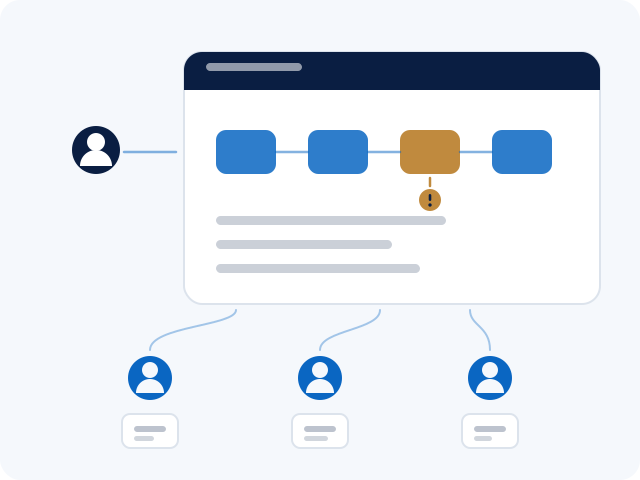
The most common reason a tool ends up abandoned is not technical. It is that nobody explained to the team what changes in their day: what each person stops doing from Monday, what still depends on them, and what to do when something does not fit the plan.
Without that, the team assumes the new thing is added on top of the old one rather than replacing it, and drops it in the first heavy week.
It is also needed before anything is implemented, when the team needs its own judgement about where AI genuinely helps and where it only adds review work.
What we do
Skills assessment
What each role knows today, what it needs to know, and where the real gap sits between the two. Uniform training spreads hours around without changing anyone’s work.
Training by role
Reception, sales, administration and management use AI for different things. Each session builds its exercises on the tasks and documents that group handles day to day.
Responsible use
Which data never gets pasted into an external tool, how to verify what comes back, and why a confidently written answer can still be wrong.
Adoption session
When a system goes live, two hours with the people who will live with it: what changes, what stays the same, and what to do when a case the flow does not cover turns up.
What you leave with
- A team that knows what to ask AI for and, above all, what not to.
- Written responsible-use criteria, adapted to your sector.
- The session materials, for whoever joins later.
- A measurable starting point: what the team knew before and what it knows after.
We start by understanding what you do
The AI operations review goes through how your processes work today and which tools you use, and ends with a concrete recommendation on where to start. Half an hour. No commitment.